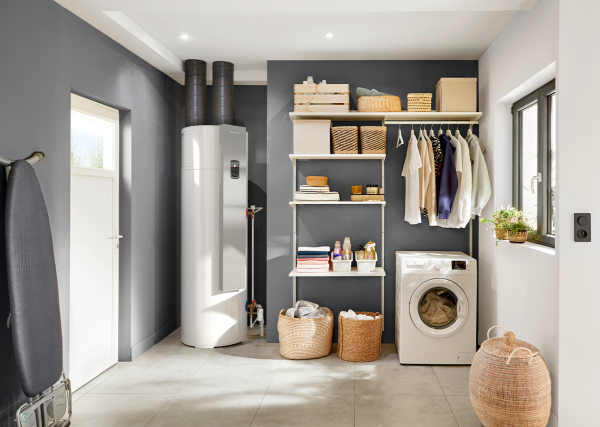
Heat Pump Water Heater: a Water Heater with a Heat Pump
A heat pump water heater is a type of water heater heats the domestic water with a heat pump instead of with electric heating element. The heat pump captures the heat naturally present in the air to heat the water. This process is known as aerothermal energy.
This solution is known to be particularly cost-effective: the resource used (air) is renewable, free, and inexhaustible.
Heat pump water heaters are often described as more eco-friendly. While they do use electricity, they consume far less than conventional electric water heaters.
How a Heat Pump Water Heater Works
A heat pump water heater consists of a storage tank and a heat pump, which can be either integrated or split (separate unit).
The heat pump captures heat from the air using a refrigerant fluid. The heat produced is then transferred to the tank via a condenser (a type of heat exchanger). The tank stores the hot water until it is used.
If the heat pump cannot produce enough hot water (during prolonged cold weather, for example, or in case of malfunction), the electric heating element built into the tank (either an immersion or steatite element, depending on the model) takes over to ensure hot water production.
Heat pump water heaters are also equipped with corrosion protection systems, such as a magnesium anode, ACI technology (impressed current anode), or hybrid ACI.
The Different Types of Heat Pump Water Heaters
There are several types of heat pump water heaters, depending on how they are installed:
- Using ambient air
- Using outdoor air via ducting
- Using outdoor air with an outdoor unit (split)
- Connected to a mechanical ventilation system (MVHR/VMC)
Unlike other configurations, ambient-air models require no major installation work—only a water connection.
Using ambient air, a heat pump water heater takes up only slightly more space than a conventional electric water heater of the same capacity.
Heat Pump Water Heater: Installation
A heat pump water heater can be installed in a house or an apartment, in new buildings or renovation projects, in heated or unheated rooms—everything depends on the configuration.
In all cases, and regardless of your home, we recommend consulting a professional installer for proper installation.
Do You Live in an Apartment?
Outdoor-air models can be installed in any room that is not considered a living space (laundry room, hallway, entrance, bathroom), whether heated or not, as long as the temperature never drops below -7°C.
For split models, the heat pump must be installed outdoors (check your building regulations), while the tank is placed indoors.
Do You Live in a House?
You can choose any configuration: ambient air, outdoor air, or split models.
Outdoor-air and split models offer more flexibility and can be installed in rooms with a minimum temperature of -7°C year-round.
Daily use is very simple and similar to a traditional water heater. No specific maintenance is required, although servicing every two years is recommended.
Install Your Heat Pump Water Heater with a Certified Professional
For installation and maintenance, it is essential to use a certified professional installer. Heat pump water heaters are more technical devices and must be installed correctly, especially split or ducted models.
We recommend contacting several professionals to compare quotes. Each installer should visit your home to provide an accurate estimate and advise on any necessary work.
How Do You Maintain a Heat Pump Water Heater?
Maintenance is recommended at least every two years and must be carried out by a professional.
What Are the Advantages of a Heat Pump Water Heater?
A heat pump water heater is:
- Environmentally friendly, as it uses air as its main energy source and no fossil fuels
- Cost-effective, significantly reducing electricity bills
- Reliable and durable, with hybrid ACI anti-corrosion protection
- Comfortable and easy to use, with fast hot water production and intuitive digital controls
- Beneficial for your home’s energy rating, improving the EPC/DPE label